























































































































































































































































































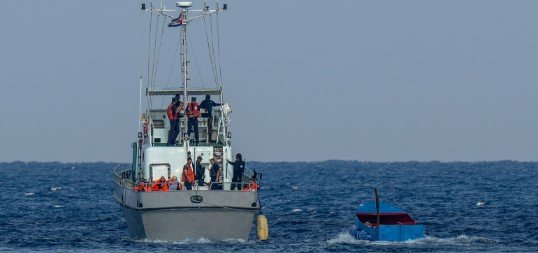
The Cuban government has officially confirmed a deadly maritime confrontation involving an American-registered vessel, resulting in the deaths of four armed individuals on board. According to a statement released by Havana’s Ministry of the Interior, the incident occurred within Cuban territorial waters when a high-speed boat originating from the United States was intercepted by the Cuban Border Guard. Authorities in Cuba have justified the use of lethal force by claiming that the occupants of the vessel were not only heavily armed but were actively attempting to initiate a violent assault against Cuban security forces. “They were coming to hit us,” a military spokesperson stated, suggesting that the vessel’s crew ignored multiple warnings to stand down and instead engaged in a hostile maneuver that forced the coast guard to open fire in self-defense.
The identities of the four men killed have not yet been publicly released, but Cuban officials allege that the group was part of a “terrorist-linked” operation aimed at destabilizing the island’s security. Preliminary reports from Havana claim that a significant cache of tactical gear, automatic weapons, and ammunition was recovered from the bullet-riddled boat following the skirmish. Cuba has long accused certain exile groups based in Florida of orchestrating maritime incursions, and this latest clash is being framed by the Cuban government as a thwarted “mercenary” mission. The vessel, which reportedly carried U.S. registration markings, is currently being held at a Cuban port for a full forensic investigation as local authorities look for further evidence of the group’s specific objectives and potential ties to external organizations.
The incident has sparked an immediate diplomatic ripple, as the U.S. State Department is currently working to verify the claims made by the Cuban government. While Washington has acknowledged reports of the incident, officials have cautioned against jumping to conclusions until a thorough independent assessment of the facts can be conducted. The location of the incident—a volatile maritime border often used for both migration and smuggling—adds a layer of complexity to the investigation. If the Cuban account is verified, it could lead to increased tensions between the two nations, which are already strained by decades of ideological and economic conflict. Conversely, if the vessel is found to be a non-hostile craft, the use of lethal force could trigger a severe international outcry and demands for accountability from the Cuban military.
As the investigation continues, family members of those potentially involved are reportedly seeking answers through diplomatic channels. The Cuban government, meanwhile, has used the event to reinforce its narrative of being under constant threat from foreign-based aggressors. Public broadcasts on the island have praised the “vigilance” of the border guards, while state-run media outlets are portraying the four deceased men as “infiltrators” caught in a criminal act. Whether this event was an isolated criminal enterprise or a politically motivated incursion remains the central question for investigators on both sides of the Florida Straits. For now, the sea remains a tense front line, as both nations wait to see how this lethal encounter will impact their precarious diplomatic relationship.