





















































































































































































































































































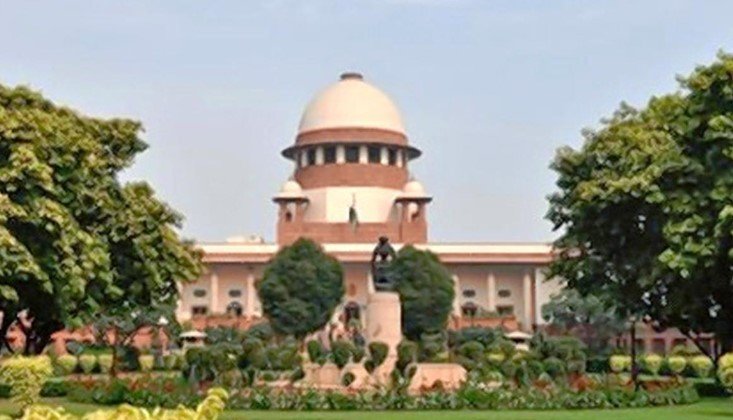
The Supreme Court of India has once again ignited a significant national debate on judicial and social reform by observing that the implementation of a Uniform Civil Code (UCC) may be the “only way” to resolve the persistent complexities arising from various religion-based personal laws. While hearing a Public Interest Litigation (PIL) that sought to harmonize laws related to marriage, divorce, inheritance, and maintenance across all communities, the apex court noted that the current fragmented legal landscape often leads to gender injustice and procedural inconsistencies that contradict the spirit of a modern secular democracy. The bench remarked that although Article 44 of the Constitution—which lists the UCC as a Directive Principle of State Policy—has remained a “dead letter” for decades, the time has come for the government to seriously consider a common code that ensures equality for all citizens regardless of their religious affiliation. During the proceedings, the court highlighted several instances where women, in particular, have been left vulnerable due to the lack of uniform protection under personal laws, arguing that a unified legal framework would not only simplify the judicial process but also strengthen national integration by removing discriminatory practices. However, the court also maintained a cautious stance, acknowledging that while it can nudge the executive toward reform, the actual drafting and enactment of such a sensitive law fall strictly within the domain of Parliament. The Centre, in response, stated that it is currently examining the Law Commission’s reports and conducting stakeholder consultations to ensure that any move toward a UCC respects the diverse cultural fabric of the country while upholding constitutional values. Legal experts suggest that this latest push from the judiciary could accelerate the political momentum behind the UCC, potentially making it a central theme in upcoming legislative sessions. Opponents of the move, however, expressed concerns that a uniform code might infringe upon the fundamental right to practice one’s religion and have called for a more inclusive dialogue that protects minority identities. Despite these differing views, the Supreme Court’s forceful observation serves as a landmark reminder that the quest for a truly egalitarian legal system in India remains unfinished without a common civil framework that treats every citizen as an equal individual before the law.