




















































































































































































































































































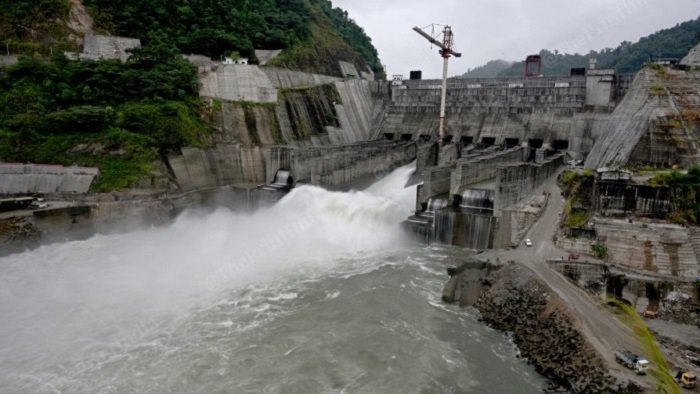
After a two-decade wait, the Subansiri Lower Hydroelectric Project has begun generating power, with its first unit synchronized to the national power grid at 6:12 pm yesterday. Managed by NHPC, this 2,000-MW project comprises eight units of 250 MW each, with the second unit also coming online on the same day. It is anticipated that three additional units will be commissioned this month, while the entire project is set to be completed by March 2027. Project consultant A.N. Mohammad emphasized that this synchronization is a significant milestone in India’s hydropower development and noted the earlier mechanical completion of Units 1 and 2. Testing is ongoing for the remaining units, with an expectation of an additional 1,000 MW capacity added by December 2025.
Originally conceptualized in 2005 at Gerukamukh, near the Arunachal–Assam border, the project encountered an eight-year suspension due to protests and legal challenges in Assam concerning dam safety and ecological impacts downstream. To mitigate these concerns, the Central government established various expert panels that recommended significant engineering improvements, such as strengthening the dam structure, enhancing seepage-control measures, and implementing earthquake-resistant designs. A study by the Central Water Commission has mandated maintaining a minimum environmental flow of 240 cubic metres per second to protect river ecology.
The reservoir associated with the project has a substantial capacity of 1,365 million cubic metres and includes a 15-metre flood cushion, along with 60 km of protective measures for the downstream riverbank. This infrastructure is expected to play a crucial role in flood moderation. Once fully operational, the Subansiri project is projected to generate approximately 7.421 billion units of renewable energy annually. Assam will benefit from an additional 300 MW of power, including 25 MW free of charge, while Arunachal Pradesh will receive 12 percent of its generated power for free. However, due to construction delays, the overall cost of the project has risen to about ₹26,000 crore.