














































































































































































































































































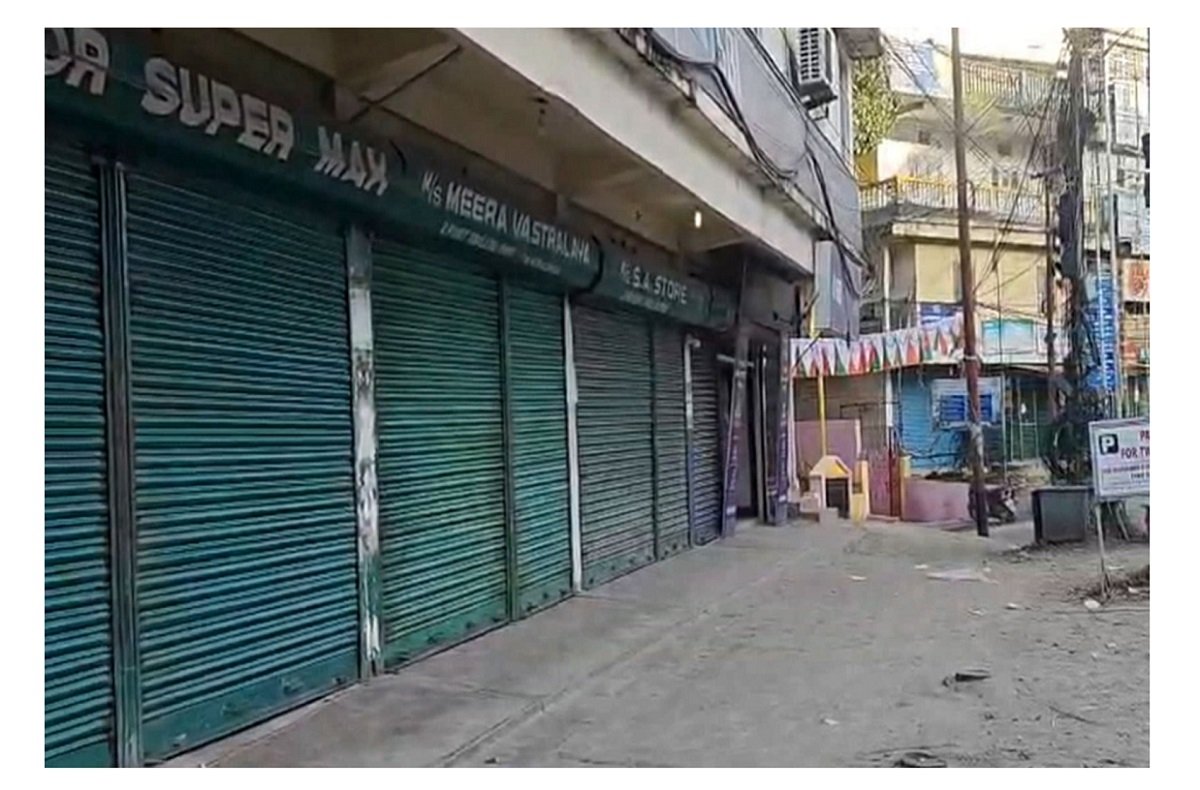
Two youth bodies in Arunachal Pradesh on Sunday reacted strongly to objections raised over the sale of pork outside Ganga Market in Itanagar. The Arunachal Pradesh Indigenous Youth Organisation (APIYO) and the Itanagar Youth Federation Arunachal (IYFA) said that the right to sell pork is a part of the livelihood of indigenous tribal communities. The issue surfaced after some members of the Muslim community living near the Masjid at Ganga Market reportedly objected to women vendors selling pork near the locality. The youth groups said that such objections were unfair and could disturb peaceful coexistence among residents in the area. Members of APIYO and IYFA visited the market on Sunday to assess the situation. They met vendors and residents to understand the concerns. Later, members of both organisations removed a signboard that described the locality as “Masjid Colony.” The organisations argued that naming a locality after a religious place could create social tensions and was not in line with the indigenous traditions of Arunachal Pradesh.
Representatives of the youth bodies told the media that Arunachal Pradesh is a tribal-dominated state, and that the traditional food habits of the indigenous communities must be respected. Pork is commonly consumed by many tribes in the state, and small-scale meat selling is an important source of income for women vendors. The organisations said that no community should interfere with the food choices and livelihoods of others. They also stated that food traditions had existed for generations and were protected by customary practices and local law. The youth bodies warned that attempts to impose restrictions on pork sale would not be accepted by indigenous stakeholders. The president of the Itanagar Youth Federation said that mutual respect between communities is necessary for peaceful living. He urged residents to recognise cultural differences and avoid actions that could lead to social disharmony. He also said that objections to pork sale in public markets go against the economic interests of local families who depend on meat sales for daily income.
APIYO and IYFA argued that public market spaces are shared by people of diverse cultures and beliefs. They said that demanding restrictions based on religious sentiment alone was unjustified. They also urged authorities to protect local sellers from harassment or pressure. Regarding the signboard removed from near the Masjid, the youth groups said that naming colonies after religious institutions may give rise to identity-based claims over land or public spaces. They said such names could create division in a city that is home to many ethnic groups. The groups suggested that colonies and localities should carry indigenous names. They recommended names such as Donyi Polo Colony and Tani Colony to reflect tribal identity and heritage. They said that official place names must preserve indigenous history and language. APIYO and IYFA have called on the district administration and municipal authorities to review official records, maps and signboards that refer to the area as “Masjid Colony.” They requested the government to take steps to ensure that market areas remain open to everyone without discrimination.