




































































































































































































































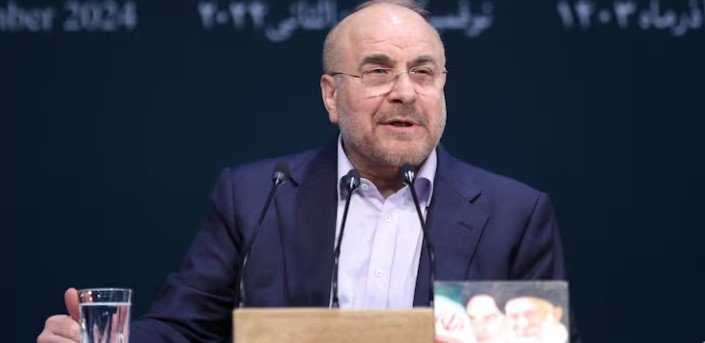
In a sharp and public rebuke of the White House’s diplomatic narrative, Iranian Parliament Speaker Mohammad Bagher Ghalibaf has dismissed President Donald Trump’s claims of an impending breakthrough in negotiations as nothing more than “promoting desire as news.” Speaking to state media following a high-level security session in Tehran, Ghalibaf characterized the Trump administration’s recent statements regarding a “likely” peace deal as a calculated psychological operation designed to soothe volatile global markets and project a false sense of diplomatic progress. The Speaker argued that while the U.S. President continues to post on social media about “great progress” and the imminent reopening of the Strait of Hormuz, the reality on the ground remains one of continued aggression and unilateral demands that infringe upon Iranian sovereignty. Ghalibaf’s comments underscore the deep-seated mistrust currently paralyzing the relationship between the two nations, suggesting that the “confident” tone coming from Washington is not shared by the leadership in Tehran.
The Iranian official’s criticism comes at a critical juncture in the regional conflict, occurring just as the U.S. White House signaled a potential willingness to finalize a peace treaty even without the immediate reopening of the strategic Strait of Hormuz. For the Iranian leadership, however, this shift is viewed with extreme skepticism; they see it as a tactical maneuver rather than a genuine change in heart. Ghalibaf emphasized that Iran would not be coerced into a lopsided agreement under the threat of “complete obliteration” of its energy infrastructure, a warning President Trump issued earlier this week. The Speaker noted that any legitimate dialogue would require a total cessation of hostilities and a return to the principles of international law, rather than “theatrical tweets” that prioritize American political optics over genuine regional stability. By labeling Trump’s claims as mere “desires,” the Iranian parliament is signaling that a final signature on any deal is far from guaranteed, despite the optimistic rhetoric emanating from the Oval Office.
Furthermore, Ghalibaf’s rhetoric reflects a domestic push to remain firm against Western pressure, even as the country faces the devastating economic impact of a closed maritime corridor and targeted strikes on its nuclear and military facilities. While Pakistan-led mediation efforts continue to flicker in the background, the divide between Trump’s “deal-maker” persona and the Iranian establishment’s “resistance” doctrine remains a formidable barrier. The Speaker’s insistence that Washington is substituting propaganda for real diplomacy suggests that any path to peace will be significantly more arduous than the White House has publicly admitted. As global investors and regional neighbors watch for a definitive sign of de-escalation, the disconnect between these two narratives—one of imminent peace and the other of defiant skepticism—threatens to leave the Middle East in a state of prolonged and dangerous uncertainty. For now, Tehran appears determined to call what it perceives as Washington’s diplomatic bluff, insisting that “wishing for a deal” is not the same as making one.