















































































































































































































































































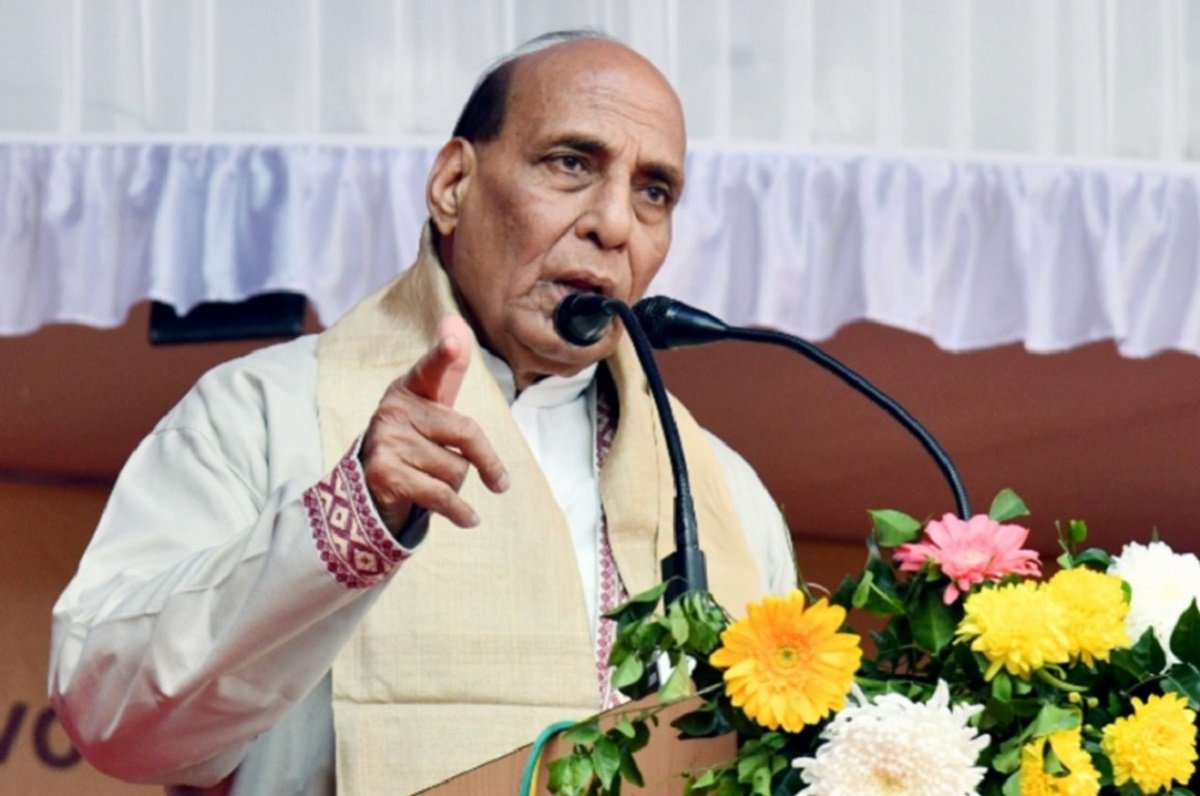
Defence Minister Rajnath Singh on Saturday inaugurated 125 projects of the Border Roads Organisation (BRO), describing them as essential for India’s national security and for opening up some of the most difficult frontier locations. The projects, spread across seven states and two Union Territories, include a combination of roads, bridges and strategic facilities that aim to strengthen military readiness and civilian access along sensitive border regions. The event was held from Ladakh, where the Defence Minister formally inaugurated the Shyok Tunnel, a 920-metre cut-and-cover tunnel on a key route connecting vital forward locations. BRO officials explained that the tunnel will improve all-weather movement for security forces and reduce travel time significantly.
The Defence Minister also inaugurated a 3D-printed HAD complex in Chandigarh, signalling a shift towards faster and technology-based infrastructure development. According to the Ministry of Defence, the 125 completed projects consist of 28 roads, 93 bridges, and four major infrastructure facilities at an overall investment of around ₹5,000 crore. Most of these projects are located in high-altitude regions or difficult terrain.
Six newly built bridges change transport landscape in Siang Valley
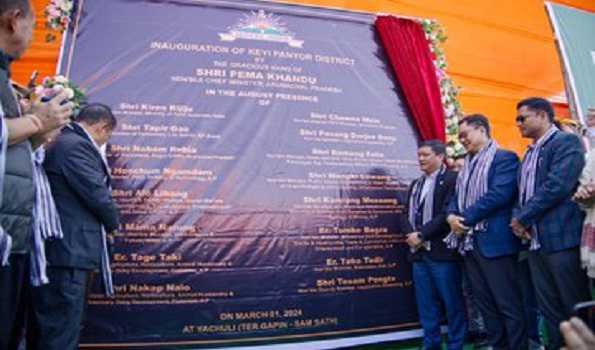
In Arunachal Pradesh, seven bridges built under Project Brahmank were formally inaugurated from Raneghat in East Siang district. Six of them lie inside the Siang and Shi-Yomi areas, considered among the most remote and strategically crucial frontier belts of the state. One of the most significant among them is the Shene Bridge located on the Tato–Menchuka road. The bridge has been constructed in an extremely difficult mountain setting and holds both military and civilian value. Officials pointed out that the structure will help in defence logistics while also supporting tourism movement towards Menchuka, which has emerged as a popular destination near the India-China border. Five more bridges along the Ditte–Dimme road—Ritbung, Rabung, Seyo, Raboung and Sirak—are expected to improve connectivity between several interior villages and provide a reliable link throughout the year. Another bridge, Naglung Ri on the Tuting–Bona axis, was also opened to traffic. Collectively, these bridges are seen as critical links for last-mile transport in areas that often remain cut off due to weather.