






































































































































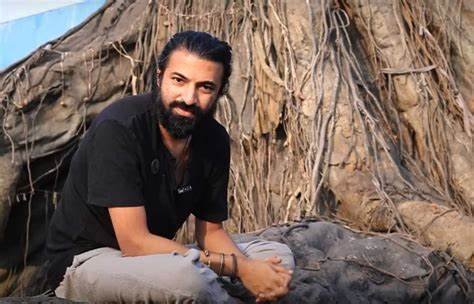





















































































































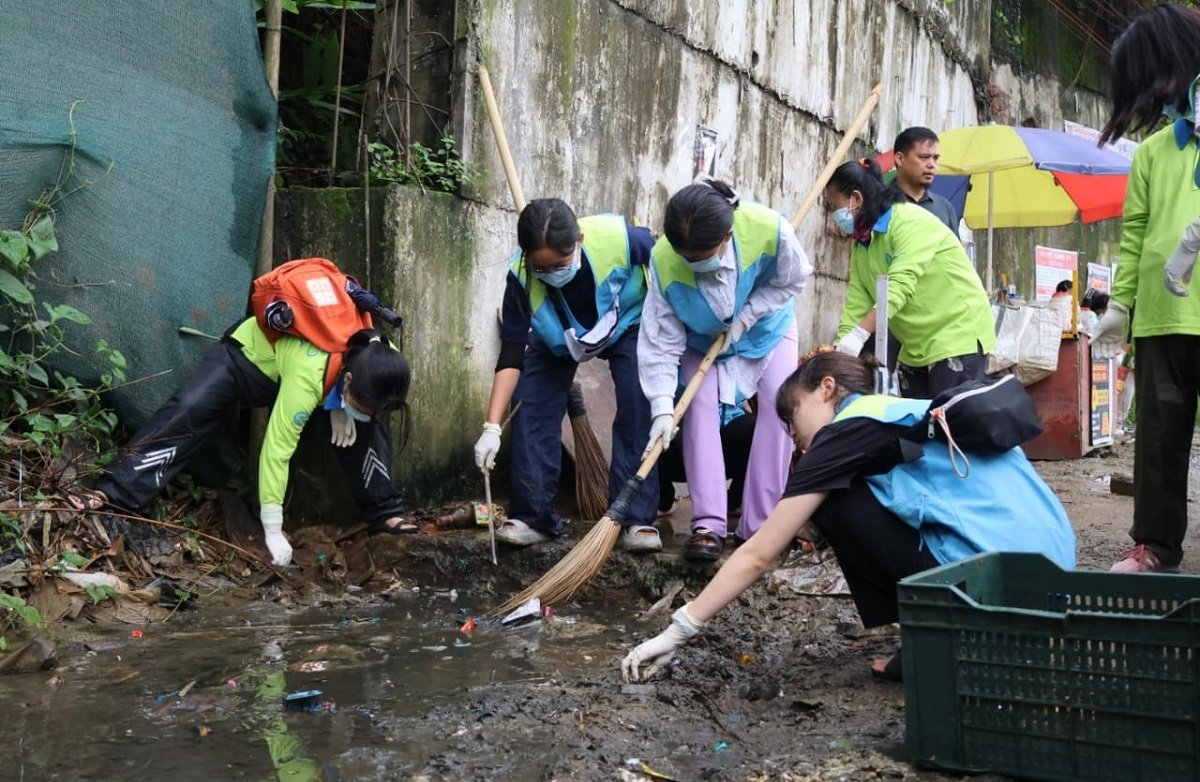
In an important step to promote cleanliness and environmental awareness, a voluntary social service cleanliness drive was organised in Koloriang town, the headquarters of Kurung Kumey district in Arunachal Pradesh, on February 11. The initiative was led by District Tourism Promotion Chairman and journalist Nangram Kayang, who called on citizens, especially young people, to take an active role in keeping their surroundings clean.
Around 10 local youths took part in the drive and worked for several hours to clear garbage from different areas of the town. During the programme, the volunteers collected and removed more than 1,600 kilograms of waste from streets, public places, and roadside areas. Residents said the effort brought visible improvement to the cleanliness of the town and helped make many areas look more organised and hygienic.
Participants said that such voluntary efforts are not only about cleaning waste but also about encouraging people to change their daily habits. Many residents who saw the volunteers at work appreciated the initiative and expressed hope that more people would join similar drives in the future. Local shopkeepers and passers-by also supported the effort by helping the volunteers in small ways and by ensuring that the collected waste was properly disposed of.
Speaking on the occasion, Nangram Kayang said that cleanliness cannot be achieved by government efforts alone and that public participation is very important. He explained that when citizens themselves take responsibility for their surroundings, long-term improvement becomes possible. According to him, such activities help create awareness about environmental protection and also encourage people to develop a sense of civic responsibility.
Kayang also said that the main aim of the programme is to build a culture where people regularly take part in community service without waiting for official instructions. He added that small steps taken regularly can bring big changes over time, especially in smaller towns where waste management systems are still developing.