













































































































































































































































































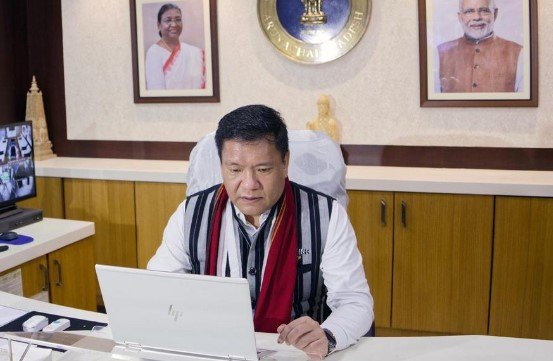
The Supreme Court of India has made a landmark decision, directing the Central Bureau of Investigation (CBI) to initiate a formal inquiry into serious allegations of corruption and nepotism involving Arunachal Pradesh Chief Minister Pema Khandu and his family members. The apex court’s directive comes in response to a public interest litigation (PIL), which alleges that the state government bypassed mandatory tendering processes to award lucrative public work contracts to firms owned or controlled by the Chief Minister’s immediate family. The bench, recognizing the seriousness of the allegations, stressed that such “institutionalized favoritism” undermines the fundamental principles of democratic transparency and equitable allocation of public resources, thereby necessitating an independent investigation by a federal agency.
The petition filed before the court provided a detailed roadmap of several high-value infrastructure projects, including road construction and bridge works, which were allegedly sanctioned through “closed-door” negotiations rather than competitive bidding. According to the complainants, these contracts resulted in significant losses to the state exchequer while enriching private entities linked to the chief minister’s kin. The Supreme Court’s intervention follows a series of heated legal battles in the lower courts, where the petitioners argued that the state machinery was too compromised to investigate its leadership. The court’s decision to hand the case over to the CBI demonstrates its unwavering stance against administrative malpractice at the highest levels of governance, requiring the agency to submit a preliminary report within a specified timeframe to ensure the probe remains time-bound.
This judicial order has immediately intensified the political heat in Arunachal Pradesh, with opposition parties demanding the Chief Minister’s resignation on moral grounds to allow for a free and fair investigation. While the state government has previously denied all such allegations, labeling them as politically motivated attempts to destabilize a performing administration, the Supreme Court noted that the “prima facie evidence” presented regarding the award of contracts warranted a more profound look by an external body. The CBI is expected to scrutinize bank records, tender documents, and the asset profiles of the involved family members. As the investigation unfolds, the case is likely to set a significant legal precedent concerning the accountability of public officials and the scrutiny of family-owned businesses engaging in state-funded projects.