


















































































































































































































































































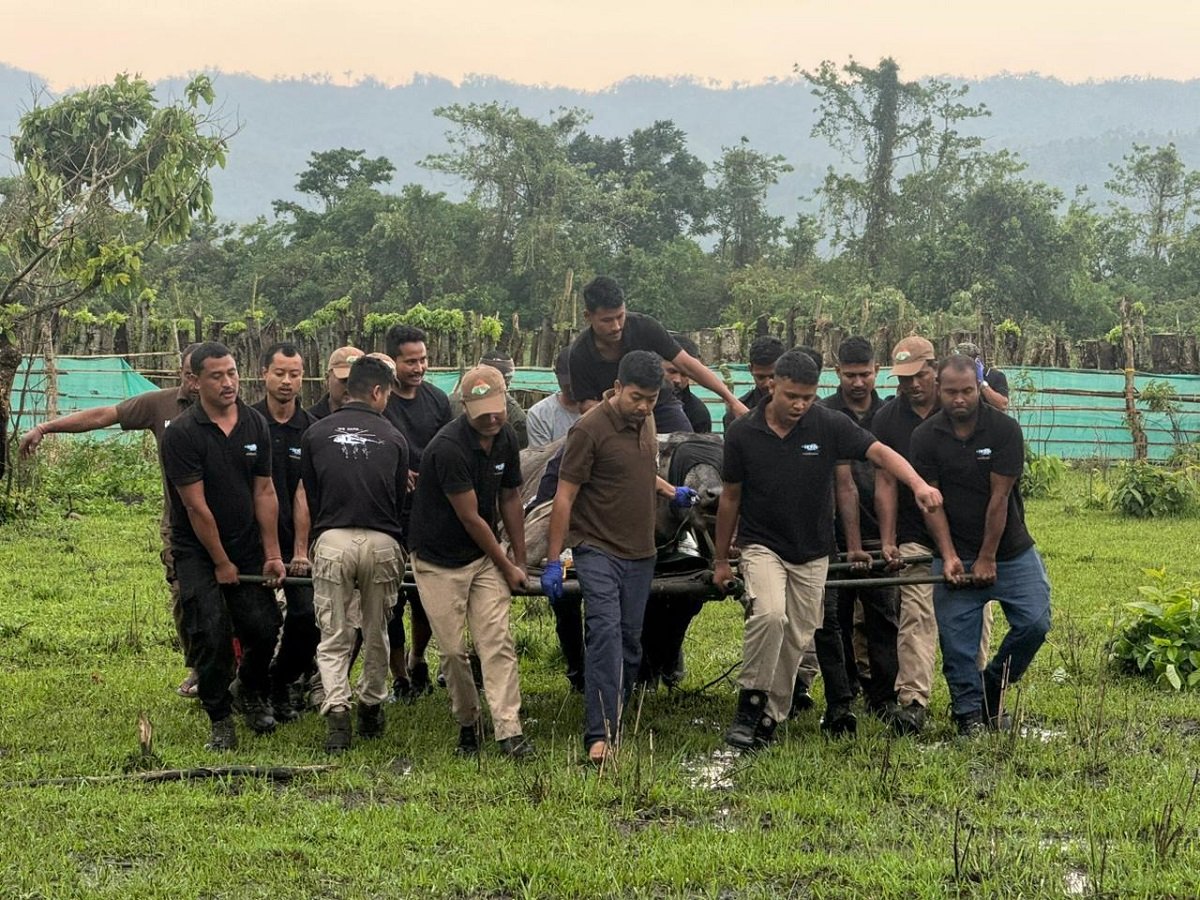
In a major conservation corner, India has begun the translocation of risked Asiatic wild water buffalo from Assam’s Kaziranga Tiger Reserve to Madhya Pradesh’s Kanha Tiger Reserve marking the longest wildlife relocation by road ever accepted in the country. The common action by the Assam and Madhya Pradesh Forest Departments seeks to introduce the species to Central India, where it has been locally defunct for further than a century. Known as “champaign masterminds,” these megaherbivores play a pivotal part in maintaining champaign ecosystems by regulating foliage and supporting biodiversity.
The Asiatic wild water buffalo (Bubalus arnee) is listed as Exposed on the IUCN Red List and enjoys the loftiest protection under Schedule I of the Wildlife Protection Act, 1972. With a global population of smaller than 4,000 — nearly all set up in Assam the species’ long- term survival depends heavily on expanding its range. The design, which aims to translocate 50 individualities over the coming time, follows a Wildlife Institute of India study that linked Kanha’s champaigns as largely suitable for the species, nearly suggesting those of Kaziranga. The beast was last recorded in Kanha in 1979. The action gained instigation after directives issued in January 2026 by Assam Chief Minister Himanta Biswa Sarma and Madhya Pradesh Chief Minister Mohan Yadav. expansive root, including niche assessments and herd selection, anteceded the operation. Specialized holding enclosures, or” were constructed to help the creatures acclimatize before release.
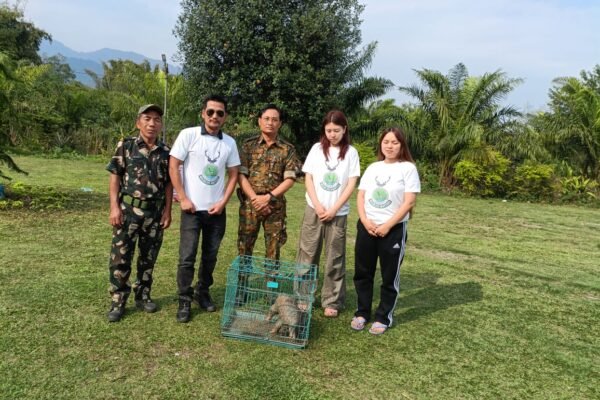
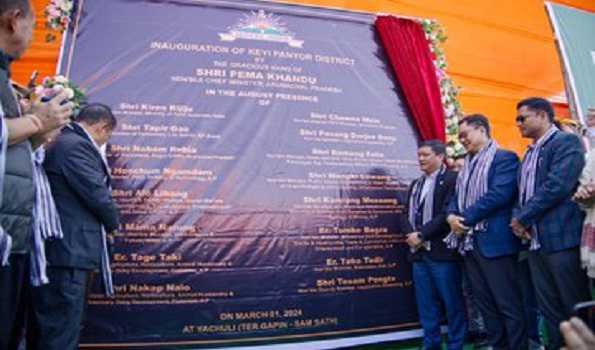
Capture operations began on March 18 using expert- supervised chemical immobilization ways. Between March 19 and April 10, seven sub-adult buffaloes were captured from colorful ranges of Kaziranga, along with one saved womanish, and placed under close veterinary observation. On April 25, the first batch of four buffaloes one joker and three ladies — was flagged off for Kanha. After travelling over 2,000 km with nonstop veterinary support, the convoy reached Kanha on April 28. The creatures were entered in the presence of Chief Minister Mohan Yadav and transferred to a controlled quadrangle for farther acclimatization
An alternate batch is anticipated to be moved by the end of April as part of the phased reintroduction plan. officers described the operation as one of India’s most ambitious wildlife conservation sweats, pressing the scale, complexity, and collaboration involved. Strict safety and weal protocols were followed throughout the trip, indeed under grueling rainfall conditions. In a complementary gesture to strengtheninter-state conservation cooperation, Madhya Pradesh has also indicated its amenability to give gharials for implicit reintroduction programmes in Assam in the future.