




















































































































































































































































































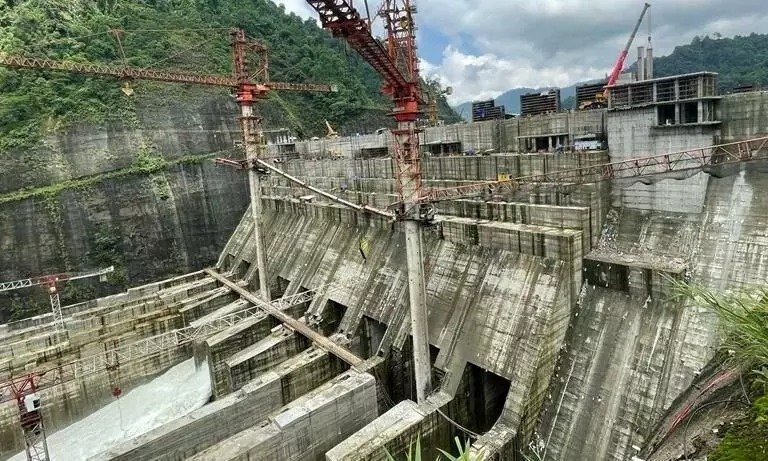
In a major boost to India’s renewable energy sector, the NHPC has officially declared the commencement of commercial operations for Unit 4 of the Subansiri Lower Hydroelectric Project (SLHEP). The 250 MW unit began contributing to the national grid at midnight on May 8, marking the halfway point for the ambitious 2,000 MW mega-project. With this commissioning, the project has now achieved a total operational capacity of 1,000 MW.
The Subansiri Lower project, situated along the Subansiri River on the border of Arunachal Pradesh and Assam, is a vital component of India’s transition toward a low-carbon energy future. According to the NHPC, the addition of Unit 4 follows a successful trial run completed on May 1. The remaining four units (Units 5 to 8) are scheduled to be commissioned in a phased manner by the end of this year. Once fully operational, the project is expected to generate approximately 7,421 million units of electricity annually, reducing carbon emissions by an estimated seven million tonnes every year.
The journey to this milestone has been marked by significant challenges. Construction originally began in 2005 but was halted for nearly eight years, between 2011 and 2019, due to local protests regarding downstream safety and environmental impacts. Following a resolution by the National Green Tribunal and specific design modifications to enhance structural safety, work resumed in late 2019. The NHPC emphasizes that the project now incorporates robust seismic safety features, sediment management systems, and a regulated environmental flow to protect the downstream ecology year-round.
Beyond power generation, the SLHEP is designed to provide flood moderation during the monsoon season, enhancing the resilience of the Subansiri-Brahmaputra river basin. The NHPC has also highlighted its commitment to social and environmental responsibility, noting that no human habitations were submerged by the project. Compensation and rehabilitation for affected agricultural land have been managed under the Arunachal Pradesh R&R Policy, while compensatory afforestation is being carried out across a vast area of degraded forest land using CAMPA funds.
The power generated from the project will be equitably shared, with the host states receiving free power benefits. Additionally, the NHPC continues to invest in the region’s socioeconomic welfare through initiatives in education, healthcare, and skill development. This integrated approach ensures that the Subansiri Lower Hydroelectric Project serves not only as a pillar of national energy security but also as a catalyst for inclusive growth in Northeast India.