






















































































































































































































































































A recent scientific expedition to the Khangri Glacier has sounded the alarm over rapid environmental degradation and a mounting flood threat in the eastern Himalayas. Researchers from the Centre for Earth Sciences and Himalayan Studies (CESHS) have reported “alarming geomorphological changes” that could jeopardize downstream communities in the Mago Chu basin.
The fifth Khangri glacier expedition, conducted in collaboration with national polar and technical institutes, identified a significant “sinking zone” where the glacier’s snout is rapidly collapsing. This structural failure has created highly unstable terrain, increasing the risk of landscape hazards. Most concerning, however, is the emergence of a potentially dangerous glacial lake. Scientists warn that this body of water could trigger a Glacial Lake Outburst Flood (GLOF), sending a catastrophic surge of water and debris into the Brahmaputra basin system.
Despite a winter of relatively heavy snowfall, the study reveals that rising temperatures and persistent climate variability are driving melting at a critical pace. CESHS Director Tage Tana emphasized that the heat is overriding seasonal gains, leading to a net loss in glacier health.
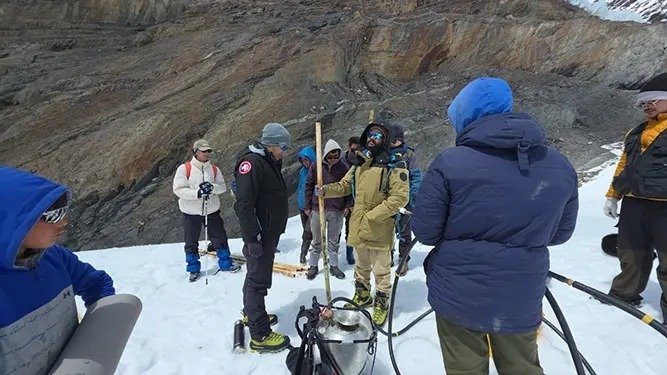
In a bid to enhance early warning capabilities, the team has installed five high-tech monitoring stakes at elevations of nearly 17,000 feet. Utilizing ice-core drilling and Differential Global Positioning System (DGPS) technology, these tools will provide real-time data on glacier movement and thinning.
As the climate continues to shift, experts stress that the stability of the Mago Chu basin—a vital headwater region—remains fragile. Local authorities and downstream transboundary regions are now being urged to prepare for increased vulnerability as the Khangri glacier undergoes this rapid, climate-driven transformation.