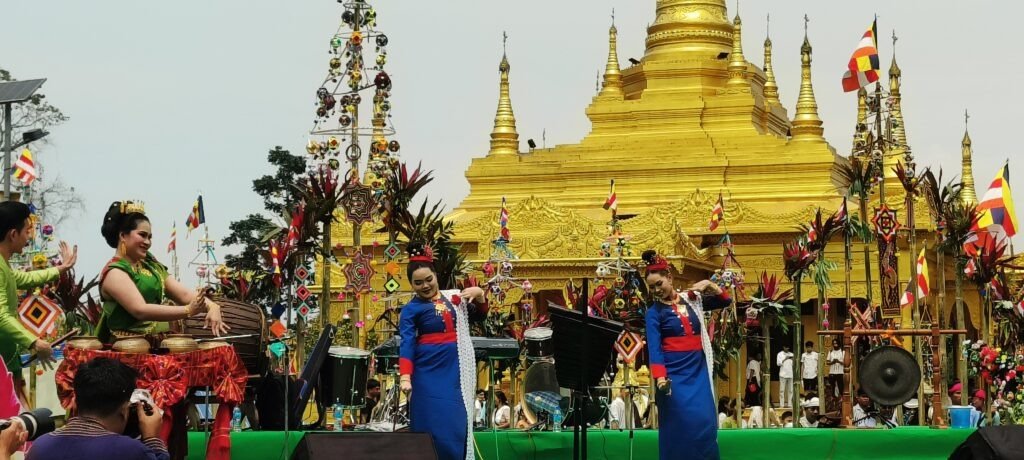
The golden pagodas of Namsai resonated with prayers and the rhythmic sounds of traditional drums as the third edition of the International Maha Sangken Festival commenced with profound spiritual fervor. A cornerstone of the Tai Khamti community’s identity, the festival has evolved into a significant international event, symbolizing unity, peace, and the rich socio-cultural heritage of Arunachal Pradesh.
The festivities began with sacred rituals and offerings to Lord Buddha, marking the first day of the traditional water festival. Devotees gathered in large numbers to invoke blessings for global well-being and prosperity. Deputy Chief Minister Chowna Mein, participating in the rituals, highlighted that Sangken is more than a celebration; it is a profound message of purification and renewal. The act of sprinkling water symbolizes the washing away of the past year’s misfortunes and the welcoming of a harmonious new beginning.
This year’s two-day celebration transformed Namsai into a vibrant stage for international cultural exchange. The festival featured a diverse array of performances from both local and international artists. Troupes from Thailand brought a global dimension to the event, performing alongside regional icons such as the Monpa Institute of Performing Arts from Dirang and the Kra Daadi district troupe. The inclusion of the Tai Khamti Heritage & Literature Society and the winners of Arunachal Super Dancer showcased a seamless blend of ancient tradition and contemporary talent.
Beyond the local festivities, the International Maha Sangken Festival has become a strategic platform for strengthening “Act East” ties. Deputy CM Mein emphasized that such gatherings do not only preserve indigenous traditions but also bolster bonds of friendship with neighboring Southeast Asian nations. The presence of high-ranking officials, including MP Tapir Gao, State BJP President Kaling Moyong, and several MLAs, underscored the government’s commitment to promoting Arunachal Pradesh as a hub for cultural tourism and international goodwill.
As the International Maha Sangken Festival concludes, it leaves behind a legacy of devotion and community participation. By bridging the gap between local tribes and international neighbors through the shared language of faith and art, Namsai continues to cement its status as a vibrant center for cultural confluence. The festival remains a shining example of how tradition can be used to foster peace, happiness, and a shared sense of humanity in an ever-changing world.