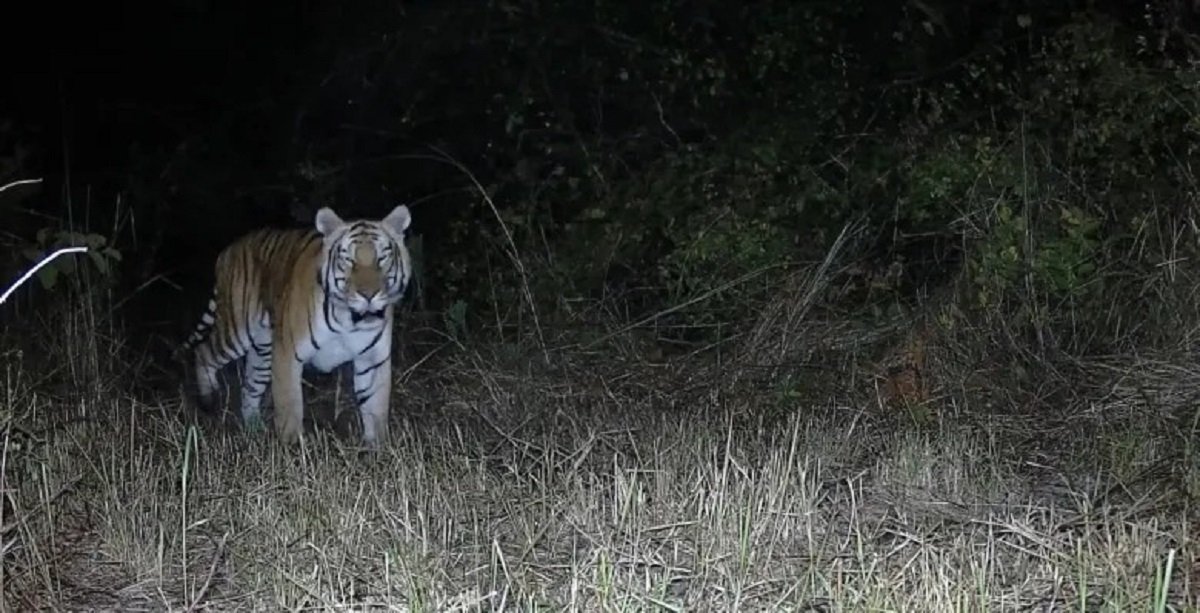
Royal Bengal Tiger has been confirmed in the D. Ering Memorial Wildlife Sanctuary through camera trap evidence, marking the species’ return to the protected area after nearly 20 years.
Forest officials said the photographic evidence was captured during the latest phase of systematic wildlife surveys conducted in the sanctuary with technical support from Ashoka Trust for Research in Ecology and the Environment (ATREE).
According to officials, forest personnel and frontline staff had recorded indirect signs of tiger movement over the past year. Several rounds of monitoring and camera trapping were conducted to scientifically verify these observations. Although earlier surveys did not produce photographic evidence, monitoring efforts continued with greater intensity.
Officials said the latest camera trap images conclusively confirmed the tiger’s presence in the sanctuary.
The surveys also documented the critically endangered Chinese Pangolin and the endangered Hispid Hare, both of which are rare species associated with grassland ecosystems.
Kempi Ete, Divisional Forest Officer, described the development as a major achievement for the sanctuary and its conservation initiatives.
“The return of the tiger after nearly two decades reflects the resilience of the ecosystem and the cumulative impact of sustained conservation efforts on the ground,” Ete said.
She added that the achievement was made possible through the coordinated efforts of forest officials, frontline staff, Eco-Development Committees and community-based organisations involved in conservation work in the area.
Officials said the confirmed presence of a tiger is an important indicator of the ecological health of the sanctuary’s riverine and grassland ecosystems, as apex predators are widely considered markers of habitat integrity.
Rajkamal Goswami, who leads biodiversity and bio-resource conservation initiatives for ATREE in Arunachal Pradesh, said the photographic evidence highlighted the success of long-term conservation work in the sanctuary.
He also stressed the importance of collaborative conservation involving research institutions and local communities and called for stronger support for scientific monitoring and habitat protection in the sanctuary, which is the only protected area in Arunachal Pradesh dominated mainly by riparian grasslands.
The Forest Department said it would continue strengthening habitat protection, scientific monitoring and community-led conservation initiatives to ensure the long-term survival of wildlife in the landscape.
Meanwhile, Oken Tayeng said the tiger’s return was a positive sign of the improving ecosystem in the sanctuary.
Tayeng, who had earlier proposed the reintroduction of rhinoceroses in the sanctuary with the state government, said the tiger’s presence could also boost eco-tourism and generate employment opportunities for youths in nearby villages.
The proposal for rhino reintroduction in the sanctuary had previously been included in the state budget by Pema Khandu as part of efforts to develop the sanctuary into a major biodiversity and eco-tourism destination.