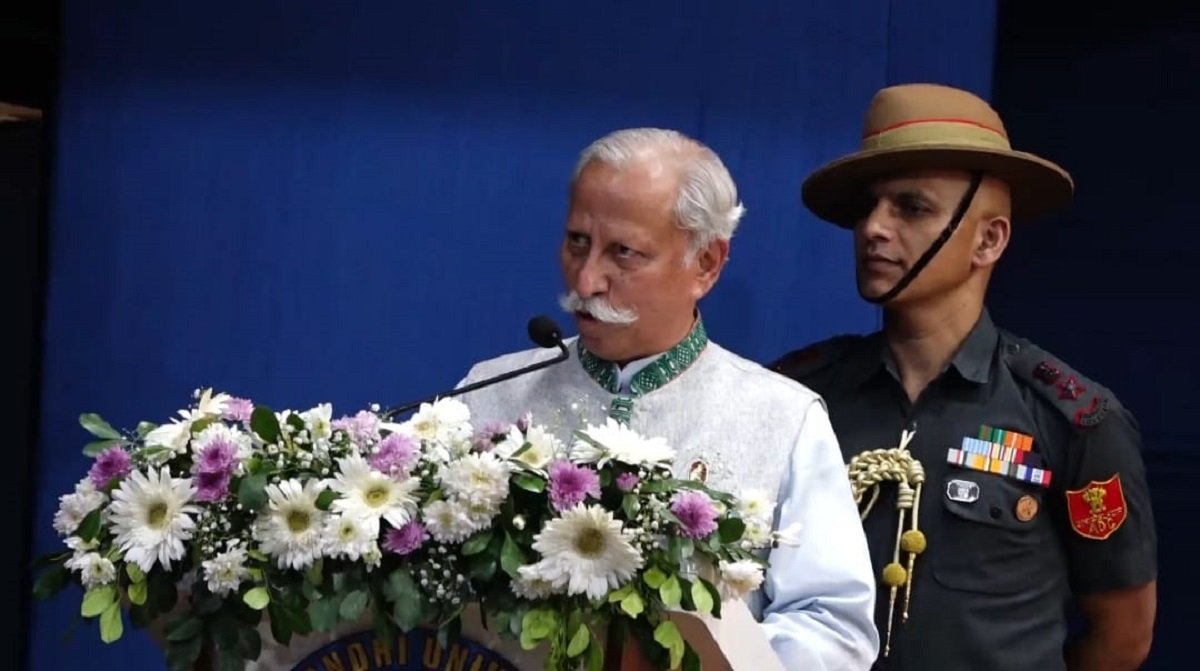






















































































































































































































































































India’s correctional system is undergoing a significant transformation, with prisons increasingly emerging as spaces of reform, dignity, and second chances rather than mere centers of punishment, said K. T. Parnaik. Addressing a gathering during the release of the book “Prison Reforms in India: Legal Framework, Judicial Role, and Institutional Mechanism,” the Governor highlighted a paradigm shift in the country’s criminal justice approach—from retribution to restoration. The event took place at the Likabali military station in the Lower Siang district, on the sidelines of a two-day seminar.
The book, authored by Dr. Muluvesalu Keyho, an assistant professor at Rashtriya Raksha University, explores the legal and institutional framework shaping prison reforms in India. Praising the work, the governor described it as an essential resource for policymakers, administrators, and scholars in fields such as law, criminology, and human rights.
Parnaik emphasized that the evolving philosophy of justice seeks not only to punish wrongdoing but also to restore dignity and rebuild lives. “The aim is to ensure that when individuals leave prison, they re-enter society with a renewed sense of responsibility, purpose, and opportunity,” he said.
Highlighting the broader implications of reform, he noted that a nation’s strength lies in its ability to rehabilitate and reintegrate offenders into mainstream society. This approach, he added, fosters inclusivity while reducing repeat offenses and strengthening social harmony.
Commending Dr. Keyho’s contribution, the governor said the book successfully bridges academic insight with practical reform strategies. He pointed out that its combination of scholarly depth and humane perspective makes it particularly relevant in today’s evolving justice landscape.
The discussion also underscored the importance of institutional mechanisms, judicial sensitivity, and progressive policies in ensuring meaningful reform. With a growing focus on rehabilitation, skill development, and mental well-being within prisons, India’s correctional institutions are gradually aligning with global best practices.
As the country continues to rethink its justice system, the shift toward reform-oriented incarceration reflects a deeper commitment to human rights and societal progress—where correction replaces condemnation, and hope becomes a pathway to change.