






















































































































































































































































































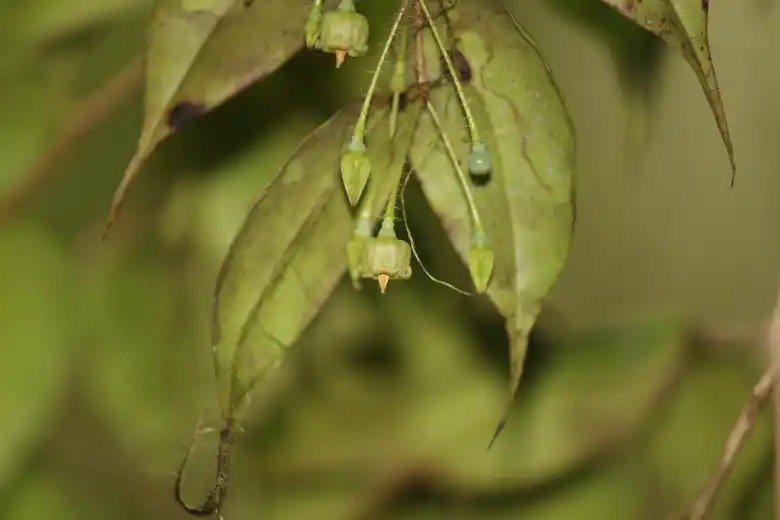
In a major botanical rediscovery from the Eastern Himalaya, scientists have rediscovered Vaccinium piliferum a rare and endangered wild relative of blueberry in Arunachal Pradesh nearly 188 years after it was first documented during the colonial period. The species was rediscovered during field surveys in Vijoynagar in Changlang district by researchers from the Society for Education and Environmental Development, CSIR-North East Institute of Science and Technology, and collaborating institutions. The findings were recently published in the international scientific journal Feddes Repertorium.
Researchers said the plant was first collected in November 1836 by British botanist William Griffith from the Mishmi Hills of present-day Arunachal Pradesh. A second documented collection was made in 1850 from Meghalaya’s Khasi Hills by noted botanists Joseph Dalton Hooker and T. Thomson. However, no confirmed sightings of the species had been recorded after that, making the latest discovery one of the rarest botanical rediscoveries in Northeast India in recent decades. The newly identified population was found growing along tributaries of the Noa-Dihing River near Vijoynagar at elevations between 1,150 and 1,280 metres.
Scientists documented only 16 individual plants scattered across an area of roughly two square kilometres, with most specimens growing far apart from one another. Already listed as “Endangered” on the International Union for Conservation of Nature Red List, the species remains highly vulnerable because of its extremely limited population and fragile habitat. Researchers have now mapped and shared GPS coordinates of all identified plants to support long-term monitoring and conservation efforts. The species belongs to the Ericaceae family, which also includes blueberries and cranberries.
Scientists described the plant as a climbing shrub capable of growing up to 4.5 metres tall, often attaching itself to trees in dense forest environments. It produces pale green bell-shaped flowers and dark purple berry-like fruits coated with a whitish-blue waxy layer resembling blueberries.
According to the study, the rediscovered population also revealed several previously undocumented features, including an epiphytic growth habit, reddish leaf margins, glaucous floral structures, and distinctive blueberry-like fruits.The rediscovery highlights the extraordinary ecological richness of the Eastern Himalaya biodiversity hotspot, particularly in remote forest regions of Arunachal Pradesh that remain scientifically underexplored. Researchers said the finding underscores the urgent need for stronger conservation measures and continued botanical surveys in the Himalayan region to protect rare species before they disappear unnoticed.