
























































































































































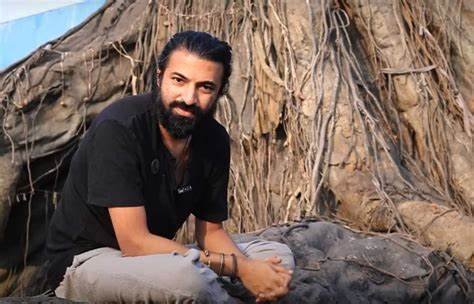
























































































































What began as a small neighbourhood cleanliness drive has grown into a community movement that has transformed a village in Manipur into a model of grassroots environmental conservation.For the past eight years, Kamei Biju, a 44-year-old Assistant Professor of Social Work at the Regional Campus of the Indira Gandhi National Tribal University (IGNTU) in Manipur, has been leading a sustained environmental campaign through the Green Club Sangaiprou, encouraging residents to take collective responsibility for keeping their surroundings clean and green.Founded on September 29, 2018, the Green Club is based in Sangaiprou Kabui Khul in Imphal West district. What started as a local initiative to promote cleanliness has gradually developed into a structured community movement involving residents of all age groups. Today, the village of around 120 households is widely recognised for its clean environment and greenery.Biju said the idea for the initiative was inspired by her mother, whose commitment to maintaining a clean home taught her the importance of cleanliness and civic responsibility from an early age.
“Maintaining cleanliness is a discipline that should be cultivated from childhood. We started the club without any grand plan, but today it continues successfully because of the support and participation of people from every section of the community,” she said.Every Saturday, around 17 to 20 volunteers gather at 5.30 am for weekly cleanliness drives that continue for nearly six hours. The volunteers clean roads, drains and public spaces while also using the opportunity to discuss issues related to the development and welfare of their locality, strengthening both environmental awareness and community participation.To recognise the dedication of young volunteers, Biju personally provides an honorarium of Rs 250 to each participant every week from her own resources. Although the Green Club has not received government funding, residents and well-wishers regularly contribute towards refreshments for volunteers during the drives.Plastic waste management has become another important part of the campaign. The club collects nearly 250 kilograms of plastic waste every week and sends it to recycling facilities. The income generated from recycling is used to purchase equipment required for cleanliness drives and roadside beautification.
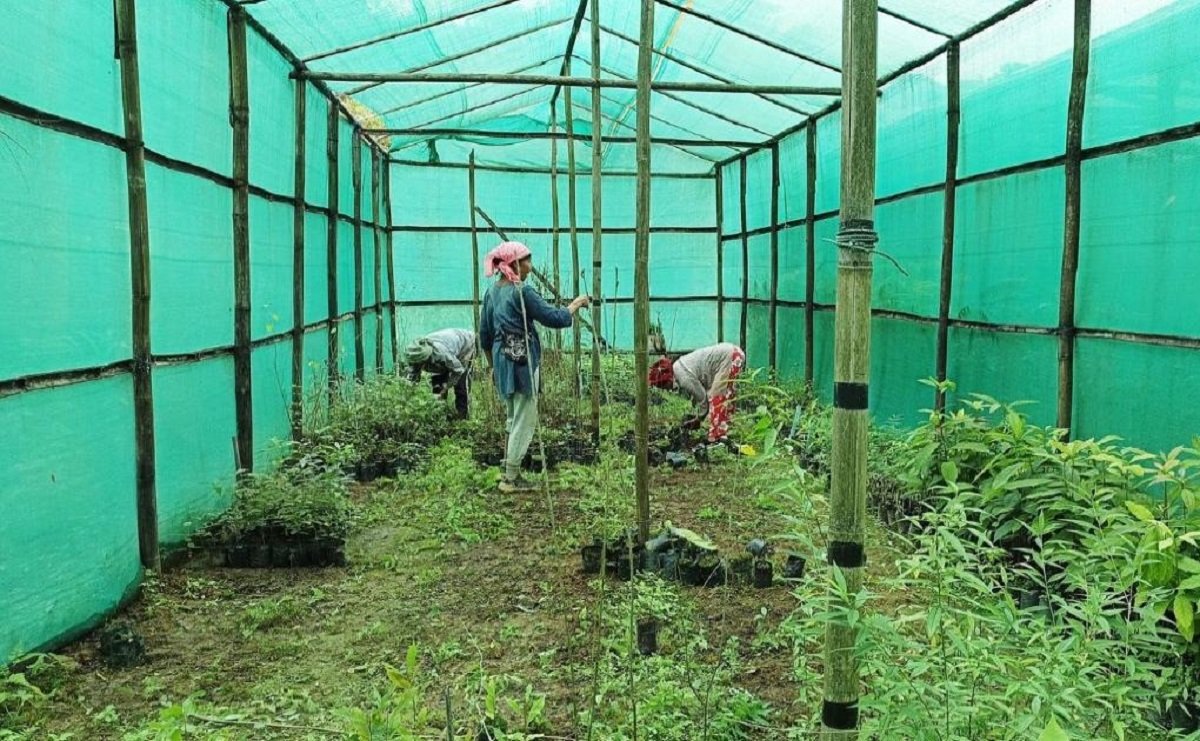
Apart from sanitation activities, the Green Club organises tree plantation programmes, environmental awareness campaigns, activities on global warming and plastic recycling, and encourages the participation of schoolchildren and young residents. The group has also planted trees, particularly fruit-bearing species, along village roads to improve the local environment.Looking ahead, Biju plans to encourage every household in the village to plant at least one tree as part of a new community campaign.She recalled that poor road infrastructure posed a major challenge during the initial years of the initiative until improvements were made in 2022. The installation of roadside dustbins has also played an important role in helping residents maintain cleanliness.The success of the initiative has begun to inspire neighbouring communities. According to Biju, the model has already been adopted in Kakhulong, while representatives from other villages have visited Sangaiprou to understand and replicate its community-based approach.