


















































































































































































































































































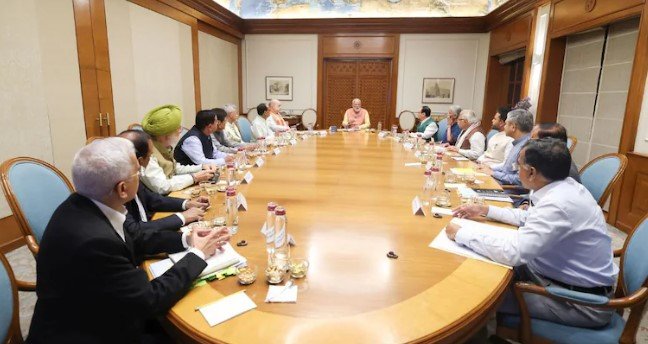
In a decisive move to address the growing instability in the Middle East, Prime Minister Narendra Modi chaired a high-level Union Cabinet meeting to review the potential fallout of the escalating conflict involving Iran. Expressing deep concern over the safety of the Indian diaspora and the potential economic shocks to the domestic market, the Prime Minister issued strict directives to all relevant ministries to implement comprehensive safeguards. The primary focus of the meeting remained the safe evacuation and security of thousands of Indian nationals currently residing or working in the volatile region. Prime Minister Modi instructed the Ministry of External Affairs to maintain constant communication with Indian embassies and to establish 24/7 emergency helplines for distressed citizens and their families back home. The government is reportedly preparing contingency evacuation plans, including the standby of military transport aircraft and naval vessels, should the situation deteriorate further.
Beyond the immediate safety of citizens, the Cabinet discussed the inevitable impact of the conflict on global oil prices and India’s energy security. Given India’s significant dependence on crude oil imports from the Middle East, the Prime Minister ordered the Ministry of Petroleum and Natural Gas to closely monitor international price fluctuations and ensure that domestic supply chains remain resilient. There were specific instructions to explore alternative sourcing and to maintain strategic petroleum reserves to mitigate any sudden spike in fuel prices that could fuel inflation. Additionally, the Ministry of Finance was tasked with assessing the impact on trade and the volatility of the Indian Rupee, with the Prime Minister emphasizing the need for proactive fiscal measures to protect the common man from the ripple effects of a global energy crisis.
The Prime Minister also underscored the importance of maritime security, particularly in the Persian Gulf and the Gulf of Oman, which are critical lanes for Indian trade. He directed the Indian Navy to enhance its surveillance and escort operations for Indian-flagged merchant vessels to ensure the uninterrupted flow of essential commodities. During the session, the Prime Minister reiterated India’s stance on diplomacy and dialogue, urging all parties involved in the Middle East to exercise restraint to prevent a full-scale regional war. However, he made it clear that India’s first priority remains the protection of its people and its national interests. This proactive stance by the Cabinet serves as a reassuring signal to the public and the markets that the government is fully prepared to handle the complex geopolitical and economic challenges arising from the Iran conflict.