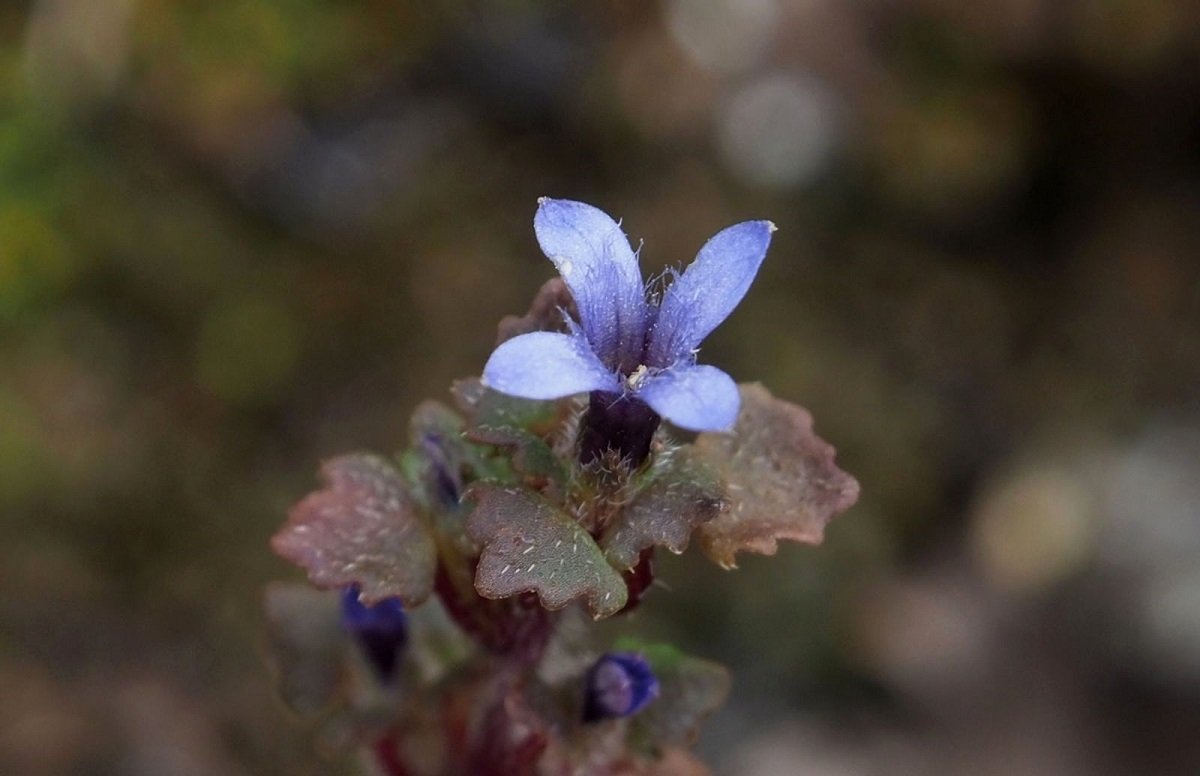
A rare Himalayan flowering plant, Cyananthus hookeri, has been rediscovered in India after 158 years, with botanists documenting the species in Arunachal Pradesh’s Tawang district for the first time.
The discovery was made on September 20, 2025, during a botanical survey near Chuna Valley, close to Mago village in Tawang. Researchers found the plant growing at an altitude of around 3,600 metres on alpine grasslands and rocky slopes. Specimens have been deposited at the Central National Herbarium for scientific documentation.
The tiny purple-blue flower belongs to the bellflower family (Campanulaceae) and is distinguished by its dwarf, densely hairy stems, small rhombic or oval leaves, and solitary purple-blue blossoms. Scientists identified the plant as Cyananthus hookeri, a species known for its highly restricted distribution across parts of the eastern Himalayas.
Although the species was first described from eastern Nepal in 1912, records show that it was last collected in India in 1867 from Sikkim by renowned botanist Sir Joseph Dalton Hooker. The latest finding marks the first confirmed sighting of the species in India in 158 years and its first-ever recorded presence in Arunachal Pradesh.
Researchers found fewer than 50 mature plants at the site, highlighting the species’ extremely limited population. Based on the International Union for Conservation of Nature (IUCN) criteria, they have recommended that Cyananthus hookeri be classified as Endangered in India.
According to the researchers, the plant occupies a very small geographical range and survives at fewer than five known locations, making it highly vulnerable to habitat degradation and environmental change. They said recognising the species as endangered would help strengthen conservation efforts and ensure protection of its fragile Himalayan habitat.