



















































































































































































































































































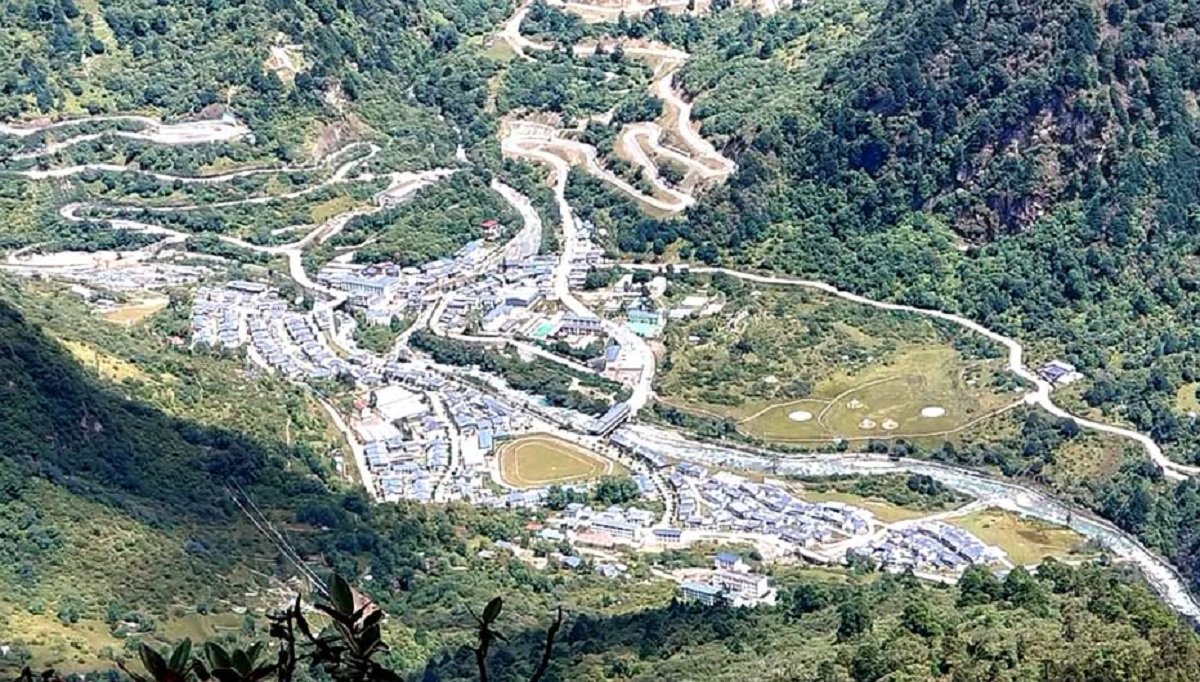
A fact-finding committee of the People’s Party of Arunachal (PPA) has raised concerns over the reported expansion of Chinese control and restrictions on Indian patrolling in the Taksing sector of Upper Subansiri district, along the Line of Actual Control (LAC).
The four-member committee, headed by former minister and PPA chief adviser Kahfa Bengia, visited Taksing. The team also included PPA vice-president Kaling Jerang, secretary Sorang Kiokam and secretary Narah Jimmy.
During the visit, the committee interacted with local leaders, elders and intellectuals from Taksing, Maza and Galemo, besides holding discussions with senior defence personnel and soldiers deployed in the region.
One of the key concerns highlighted by the committee relates to Shera 5 Point, identified as an Indian patrolling point. According to accounts shared with the team by local residents, Indian and Chinese troops were involved in a physical confrontation at the location in 2023.
The committee claimed that Indian troops subsequently withdrew from the area and have not returned, while Chinese People’s Liberation Army (PLA) personnel later removed remaining Indian markers and prevented Indian patrols from reaching the point.
The PPA team described the development as an example of what it termed the gradual consolidation of Chinese presence in the area.
The committee also raised concerns over Nanga Pahar, traditionally used by the Nah and Mara communities for hunting and yak rearing. According to the FFC, local residents have been barred from entering the area, a restriction it claimed has created greater operational space for PLA activities.
“The nature of the intrusions is well calculated, gradual and persistent,” the committee said, drawing a comparison with what it described as a recurring pattern in the region.
Winter Patrolling Gaps Flagged
The fact-finding team also pointed to what it described as operational vulnerabilities along the frontier. It claimed that Indian Army patrolling in the area is largely restricted to the April-October period, with harsh winter conditions and heavy snowfall affecting regular patrols during the remaining months.
The committee further said that porters who transport supplies for Indian troops are generally not engaged during winter, which, according to the team, indicates a reduced Indian presence in forward areas.
As measures to strengthen the frontier infrastructure and security presence, the FFC called for the Nacho-Taksing Border Roads Organisation (BRO) road project to be expedited on a war footing.
It also recommended prioritising the proposed 68-km BRO road between Galemo and Pokorla and called for the Taksing-Pokorla road via Yaja and Huri to be completed under a strict, time-bound schedule.
The committee additionally recommended construction of a helipad at Sipi 2 (Rest Point) and establishment of permanent Army base camps at Sipi 4 and Sipi 6.
Better Connectivity Urged
The PPA panel also highlighted inadequate electricity and communication infrastructure in forward locations such as Maza and Galemo.
It called for dependable power supply to replace diesel generators and urged authorities to ensure functional telephone and network connectivity in the remote areas.
According to the committee, both soldiers and local residents identified poor power and communication facilities as significant challenges affecting life and operations in the strategically sensitive frontier region.
The findings and recommendations of the PPA committee are based on its interactions during the July 10 visit and reflect the concerns raised by local residents and personnel in the area.