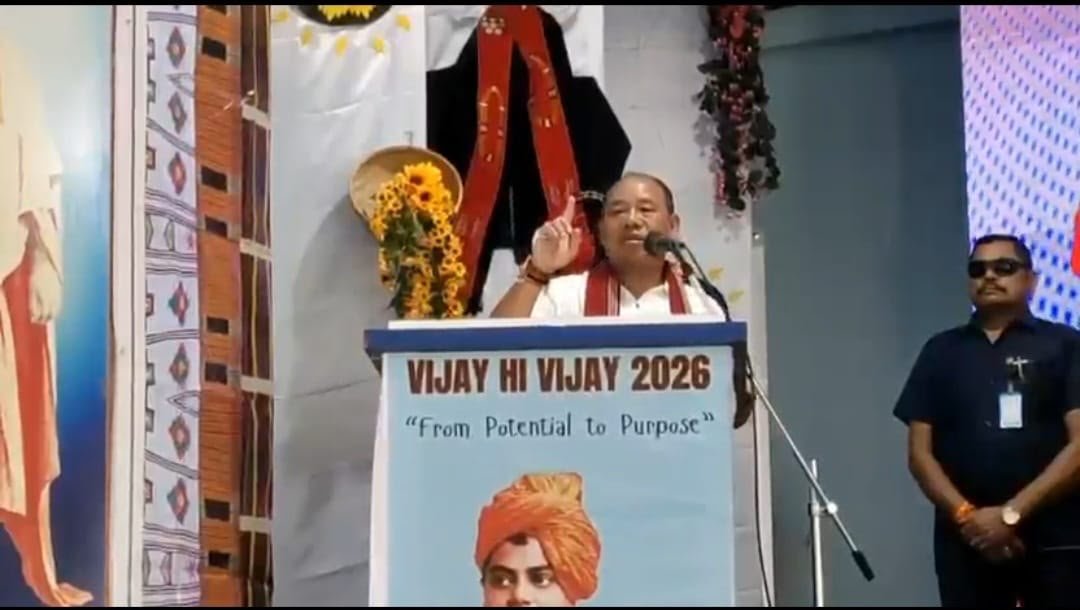
The People’s Party of Arunachal (PPA) has strongly opposed the implementation of the Arunachal Pradesh Freedom of Religion Act, 1978 (APFRA), and urged the state government to convene a special session of the Legislative Assembly to discuss the issue and its relevance in the present context. PPA president Nabam Vivek said the party adopted a formal resolution against the implementation of the Act during its state executive meeting held on June 11. The meeting was attended by state office bearers and leaders of various frontal organisations of the party. The demand comes shortly after a high-powered committee headed by retired Justice BP Katakey submitted draft rules for the implementation of the Act to the state government on June 8, nearly 48 years after the legislation was passed.
The APFRA was enacted in 1978 with the objective of prohibiting religious conversions through force, fraud or inducement. However, the law remained unimplemented for decades because operational rules were never framed.Questioning the need for certain provisions in the draft rules, Vivek raised concerns over the collection of religious demographic data by the government.“What will the government do with data regarding a citizen’s religion? Whether an individual chooses to practice Sikhism, Buddhism, Christianity or Hinduism, keeping a record of this information serves no governance purpose,” Vivek said. The PPA leader argued that the Act has lost its relevance over time and claimed that its implementation could adversely affect communal harmony and social unity in the state. He said Arunachal Pradesh has historically maintained peaceful relations among different communities and religious groups, and warned that enforcing the law could create divisions within families and tribal communities.
“This law will not save tribal identity, nor will it successfully stop anyone from choosing their faith. Instead, enforcing it creates a high risk of communal disharmony, leading to potential conflicts within families and tribes on religious lines,” he said. Vivek further said that Arunachal Pradesh has long been known as one of the most peaceful states in the Northeast and stressed that maintaining peace and harmony should remain a priority.“Arunachal has always been a peace-loving state, and we intend to keep it that way. The PPA opposes this Act from the bottom of our hearts and will challenge it through every democratic and legislative process available,” he added. The party also urged the government to halt the implementation process in what it described as the larger public interest. Meanwhile, the Human Rights of Arunachal (HRA) has also expressed opposition to the implementation of the APFRA and appealed to the state government and the ruling Bharatiya Janata Party (BJP) to reconsider the recommendations made by the high-powered committee. In a memorandum submitted to Chief Minister Pema Khandu on Sunday, the rights organisation voiced concern over the possible social consequences of enforcing the Act. It urged the government not to proceed with its implementation, citing the state’s long tradition of peaceful coexistence among people belonging to different faiths and communities.The HRA stated that enforcing the decades-old legislation could disturb the prevailing atmosphere of peace, brotherhood and communal harmony in the state. The organisation also questioned the practical benefits of implementing the Act.
“In our view, the implementation of APFRA is unlikely to bring any significant benefit either to the people of Arunachal Pradesh or to the state government. Instead, it may create misunderstanding and division among communities,” the memorandum stated. The organisation further criticised the recommendations of the high-powered committee, claiming that they do not adequately reflect the views and concerns of a large section of the state’s population. The debate surrounding the APFRA has gained momentum in recent weeks following the submission of the draft rules. While supporters argue that the law is intended to regulate religious conversions through coercive means, critics maintain that its implementation could have unintended social consequences and affect communal harmony in the state.