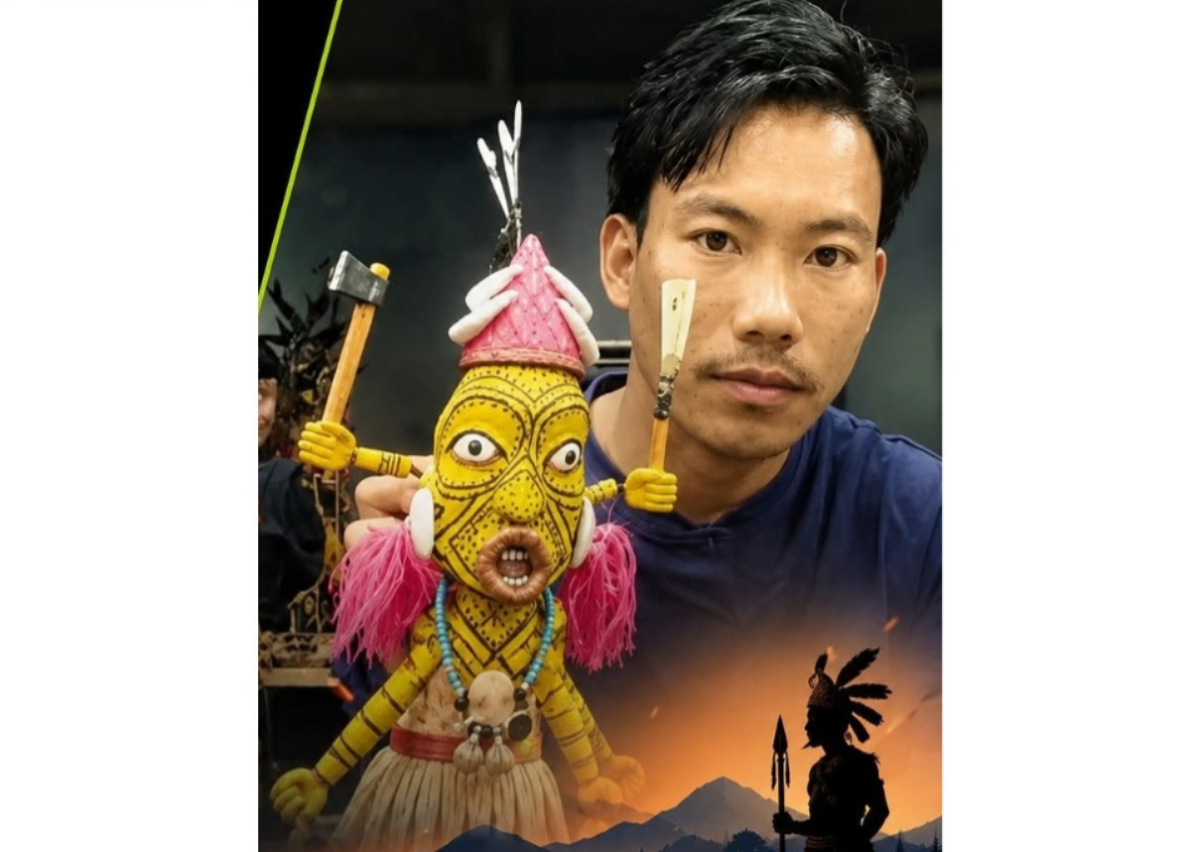
A traditional folktale of the Wancho tribe from the remote Patkai Hills in Arunachal Pradesh’s Longding district is being brought to life as an animated short film, marking the first known adaptation of a Wancho oral narrative into animation.
The project is currently being developed through a two-month production workshop at the Srishti Manipal Institute of Art, Design and Technology (SMI) in Bengaluru. The initiative is a collaboration between the Adivasi Arts Trust (UK), the Bryan Guinness Charitable Trust (UK), and SMI. The production team includes four undergraduate animation students and two young Wancho artists, working under the guidance of faculty member Vijay Punia.
The film traces its origins to a 2019 cultural documentation project in Kamhua Noknu, one of the largest Wancho villages in Longding district. During the research, conducted under the Department of Anthropology at North-Eastern Hill University (NEHU), Shillong, researchers recorded 32 oral narratives from village elders.
The stories were translated by local teacher Jatwang Wangsa and later published in the book Myth, Memory and Folktale of the Wancho Tribe of Arunachal Pradesh. The collection preserves generations of oral traditions that reflect the Wancho community’s cultural values, beliefs and close relationship with nature.
The animation initiative began taking shape in 2020 with a stop-motion animation workshop in Kamhua Noknu, where local youths received training using cameras, computers and animation equipment. While 16 participants initially joined the programme, a dedicated group continued the project, which was later documented in the 2021 film Myths of the Wancho.
Among the recorded stories, The Story of the Gourd was selected for adaptation because of its rich portrayal of Wancho traditions. A pre-production workshop held at NEHU in 2021 helped develop the screenplay, storyboard, character designs and animation concepts with the participation of students, scholars, media professionals and members of the Wancho community.
Although the project experienced delays in the following years, production resumed after receiving financial support from the Bryan Guinness Charitable Trust.