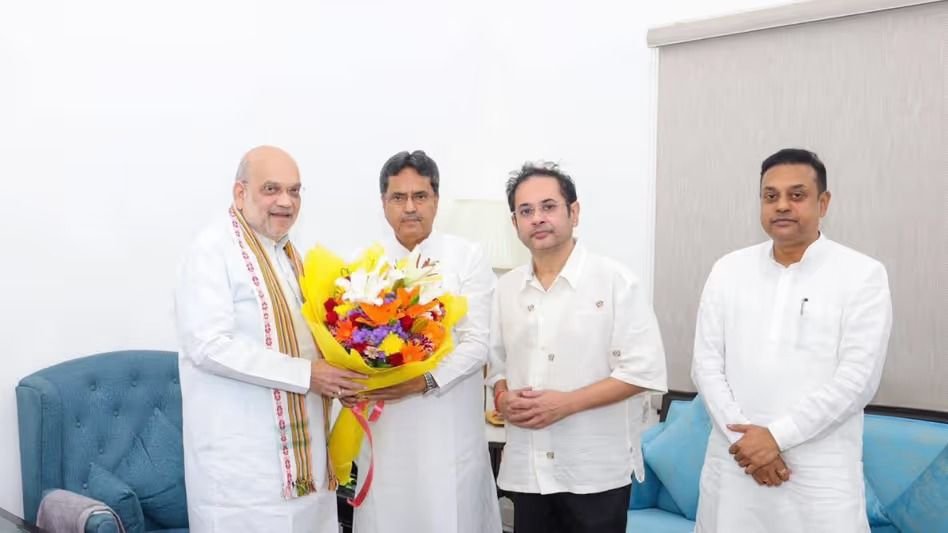
With elections to the Village Committees under the Tripura Tribal Areas Autonomous District Council approaching, speculation over a possible political understanding between the BJP and Tipra Motha has intensified following a meeting between Union Home Minister Amit Shah, Tripura Chief Minister Manik Saha and Tipra Motha founder Pradyot Kishore Manikya Debbarma in New Delhi on September 4.
Saha said he met Shah in New Delhi and held a “fruitful and constructive discussion” on matters of mutual importance, along with issues related to the development and welfare of the people of Tripura.
BJP’s North East Coordinator Sambit Patra was also present at the meeting.
Agartala: According to sources, the meeting was held at Shah’s residence and focused primarily on issues concerning Tripura’s indigenous tribal population, the implementation of the Tripartite Agreement and the upcoming Village Committee elections.
Sources claimed that Shah assured the Tipra Motha leadership that the Tripartite Agreement would be implemented soon.
The Union Home Minister also reportedly assured the delegation that land rights would be granted in accordance with the provisions of the Sixth Schedule of the Constitution.
The meeting assumes significance as the upcoming Village Committee elections are expected to influence the political equations among the BJP, Tipra Motha and other parties in the tribal areas of Tripura.
The meeting has fuelled speculation about a possible electoral understanding between the BJP and Tipra Motha. However, neither party has made any formal announcement regarding an alliance or seat-sharing arrangement so far.
The Tripartite Agreement, signed in March 2024 between the Centre, the Tripura government and the Indigenous Progressive Regional Alliance, led by Pradyot Kishore Manikya Debbarma, seeks to address issues concerning the political, economic and cultural rights of Tripura’s indigenous population.
The latest meeting is therefore being closely watched as both parties prepare for the upcoming Village Committee polls, which could play a significant role in shaping the political landscape of the state’s tribal areas.