Branded “anti-national” by some, accused by others of acting at the behest of foreign forces or even serving Chinese interests, anti-dam activists in Arunachal Pradesh say they are being subjected to an increasingly hostile campaign. Protest leaders allege that village heads opposing the project are being sidelined, financial inducements are being offered to secure support, and stringent laws such as the UAPA are being invoked against those resisting the proposed dam. At the heart of the dispute is the proposed 11,200 MW Siang Upper Multipurpose Project (SUMP), which has triggered an intense confrontation between the government and indigenous communities.
The agitation has escalated significantly, with the Siang Indigenous Farmers’ Forum (SIFF) and the Siang Upper Multipurpose Project Affected Area Youth Association (SAYA) calling a 36-hour bandh beginning Monday. The administration has also suspended mobile internet services across Upper Siang district amid rising tensions.
Opponents of the project argue that the government is moving ahead without adequately consulting local indigenous communities. According to them, surveys linked to the proposed Pre-Feasibility Report (PFR) have been initiated without transparently explaining where drilling would take place, what impacts it could have on local communities, or how the project might eventually transform the region.
Activists further allege that consent for the PFR has been obtained through misleading means. Some villagers were reportedly promised compensation, while others were allegedly assured substantial financial benefits in return for signing documents. Protest leaders claim that many residents were never informed of the contents of English-language documents they were asked to sign. They also allege that signatures from multiple members of the same family and even dubious signatures were submitted as evidence of public consent.
Tagori Mize, spokesperson of a local indigenous farmers’ organization, questions what he describes as contradictory messaging from the government. While authorities insist that only a preliminary feasibility study is being conducted, several political leaders have publicly stated that the dam will eventually be built, he said. Mize also questioned why large security deployments have taken place and why public relations agencies have allegedly been engaged to influence public opinion if no final decision has been taken.
For the Adi community, the Siang is more than a river. It is regarded as a “mother river” and a central part of their cultural identity and history. Protesters point out that opposition to large dams on the Siang dates back more than four decades and that earlier proposals had faced strong resistance long before concerns about China’s activities upstream became a major issue.
Anti-dam leader Dubit Siram alleges that authorities are attempting to portray the movement as anti-national in order to weaken public opposition. He argues that concerns over national security are being used to override environmental safeguards, forest protections and indigenous rights. Protesters insist they are not opposed to development or national interest but demand transparency, scientific scrutiny and meaningful consultation. If the project is truly essential for national security, they argue, the Centre should directly engage with local communities and publicly release all technical and scientific assessments.
The government’s position, however, is rooted in strategic concerns. Officials have repeatedly pointed to China’s massive hydropower project on the Yarlung Tsangpo River in Tibet, arguing that future manipulation of water flows could pose risks to downstream regions in India. Supporters of the Siang project contend that a storage-based dam could help India respond to both sudden floods and water shortages originating upstream.
Protesters remain unconvinced. They question the scientific basis of claims being made about the Chinese project and argue that no transparent assessment has been released showing how another mega dam would effectively mitigate those risks. They also allege that powerful political interests stand to benefit financially if the project proceeds.
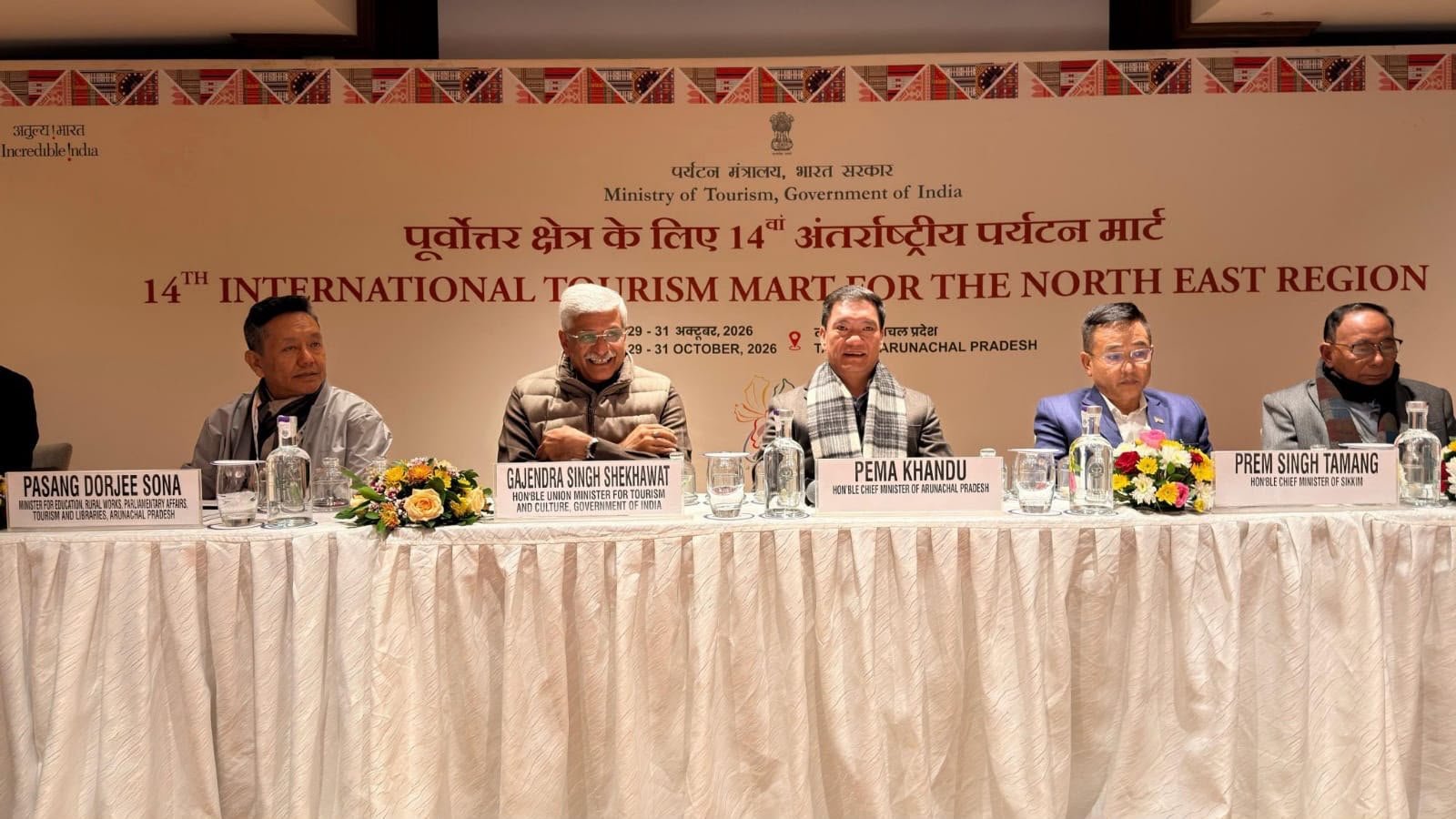
Amid growing unrest, Arunachal Pradesh Chief Minister Pema Khandu has sought to reassure residents that neither the state government nor the Centre has taken any final decision on constructing the Siang Upper Multipurpose Project. Addressing concerns within the Adi community, Khandu emphasized that the government is presently focused only on preparing a Pre-Feasibility Report, which will examine the project’s viability, impacts and alternatives.
“Let me be clear. We are not talking about dam construction at this stage,” Khandu said, stressing that no construction decision would be taken without extensive public consultations and public consent.
The Chief Minister noted that the project was accorded National Project status by the Union government in 2008. Referring to reports of China’s dam construction activities in Medog County, close to the Indian border, Khandu argued that the region faces genuine water security concerns because nearly 65 per cent of the Siang’s flow originates in China. According to him, scientific studies are needed to evaluate how best to protect the river system and ensure ecological balance in the Siang and Brahmaputra basins.
Khandu also assured residents that any future decision would be governed by the Right to Fair Compensation and Transparency in Land Acquisition, Rehabilitation and Resettlement Act, 2013, and the Environment Protection Act, 1986. Rejecting claims that land would be acquired or people displaced without consent, he described such fears as misinformation.
Appealing for calm, the Chief Minister said the doors for dialogue remain open and urged all stakeholders to participate in informed discussions. At the same time, he cautioned against bandhs, blockades and violence, saying such actions ultimately hurt local communities. “Violence can never be the answer,” he said, reiterating that the government would move forward only through consultation and consensus.