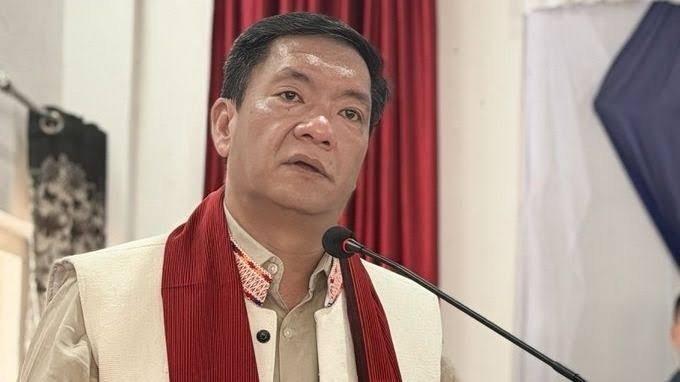
Arunachal Pradesh Rural Development and Panchayati Raj Minister Ojing Tasing has strongly advocated for the proposed Siang Upper Multipurpose Project (SUMP), declaring it vital for India’s national and water security while simultaneously emphasizing that the rights, interests, and overall well-being of local communities impacted by the infrastructure initiative must be fully protected through constructive dialogue and ongoing consultation. Representing the Pangin Assembly constituency in the Siang district, Tasing underscored that India can no longer afford to ignore or remain indifferent to the massive, large-scale dam construction and hydrological infrastructure developments being aggressively undertaken by China upstream along the Yarlung Tsangpo in Tibet, which subsequently enters India as the Siang river before transforming into the mighty Brahmaputra. Pointing to these strategic realities, the minister noted that the SUMP carries profound significance for safeguarding the nation’s long-term water security, asserting that as neighbouring powers expand their footprint, India must proactively prepare to secure its strategic interests and guarantee that its vital trans-boundary water resources can never be weaponized or utilized as an instrument of political or economic pressure against the country. However, Tasing was careful to highlight that safeguarding national security and preserving the welfare of local citizens should never be treated as mutually exclusive or competing objectives, maintaining instead that national interest and community welfare must advance hand in hand. He acknowledged that alongside fortifying the nation’s geopolitical and environmental future, the government holds a solemn responsibility to protect every citizen and indigenous community residing within the project-affected regions. By calling for transparent engagement, the minister seeks to bridge the gap between critical national defense imperatives and the legitimate livelihood concerns of local residents, ensuring that infrastructure development moves forward inclusively and equitably without marginalizing vulnerable populations. This balanced stance highlights the complex challenges confronting frontier states as they navigate strategic imperatives, environmental considerations, and community trust in sensitive border zones.